Hydrogen’s small molecular size facilitates permeation through many conventional materials, leading to leakage and potential embrittlement of metals. These characteristics create “unique” (read: expensive) engineering challenges.
And if you store it as a liquid that’s when you enter the whole cryogenic problem, seeing it needs to be cooled to over - 225c
Even with advanced insulation, liquid hydrogen storage experiences unavoidable boil-off at rates of 0.3-3% per day, creating both economic and safety challenges.
And if you could make hydrogen via electrolysis, even with some uber wunderful unobtanium catalyst then you’re still just waiting electricity that we can store far more efficiently in batteries (and with sodium batteries hitting the market there is going to be a huge revolution in battery economics and tech that will make lithium look like a drop in the ocean.
The problems are mostly solved already. You wouldn’t use metals known for hydrogen embrittlement. Often times, you’d use something else, like HDPE or fiberglass that avoids this issue. Storage facilities can even be naturally occurring geological features, like salt caverns.
You would only use LH2 for specific cases, specifically where you are expected to use up the hydrogen quickly. But even this is changing, as self-refrigerating systems are being developed, allowing for very long-term LH2 storage.
We already can make hydrogen via electrolysis. This is a long-solved problem. Efficiency is not that relevant. The main limitation of batteries is that you simply cannot make enough of them. There are huge resource limitation problems. Meanwhile, hydrogen can be made from water and is effectively unlimited as a resource.


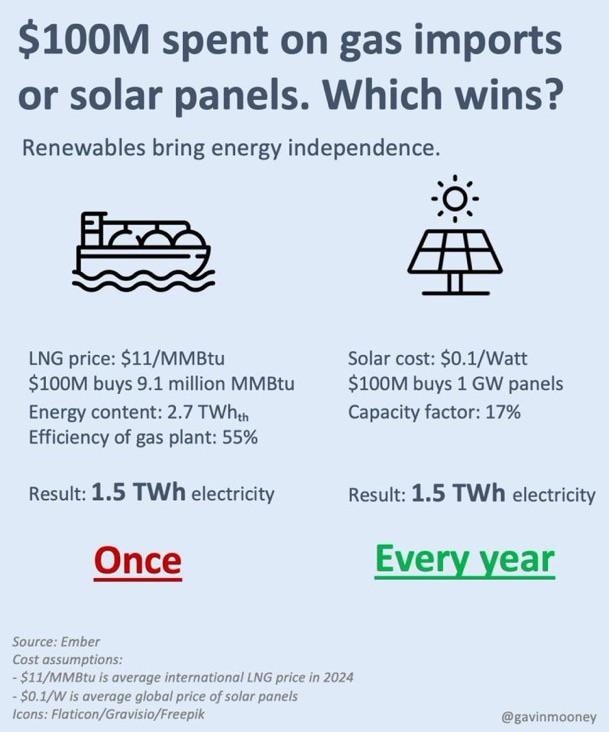
What are you going to store hydrogen in to make this remotely viable? You lose like 60% of hydrogen within 7 days with current tanks and seals.
The new sodium batteries make this completely pointless from a cost and efficiency context
Hydrogen can be stored for years.
Hydrogen’s small molecular size facilitates permeation through many conventional materials, leading to leakage and potential embrittlement of metals. These characteristics create “unique” (read: expensive) engineering challenges.
And if you store it as a liquid that’s when you enter the whole cryogenic problem, seeing it needs to be cooled to over - 225c
Even with advanced insulation, liquid hydrogen storage experiences unavoidable boil-off at rates of 0.3-3% per day, creating both economic and safety challenges.
And if you could make hydrogen via electrolysis, even with some uber wunderful unobtanium catalyst then you’re still just waiting electricity that we can store far more efficiently in batteries (and with sodium batteries hitting the market there is going to be a huge revolution in battery economics and tech that will make lithium look like a drop in the ocean.
The problems are mostly solved already. You wouldn’t use metals known for hydrogen embrittlement. Often times, you’d use something else, like HDPE or fiberglass that avoids this issue. Storage facilities can even be naturally occurring geological features, like salt caverns.
You would only use LH2 for specific cases, specifically where you are expected to use up the hydrogen quickly. But even this is changing, as self-refrigerating systems are being developed, allowing for very long-term LH2 storage.
We already can make hydrogen via electrolysis. This is a long-solved problem. Efficiency is not that relevant. The main limitation of batteries is that you simply cannot make enough of them. There are huge resource limitation problems. Meanwhile, hydrogen can be made from water and is effectively unlimited as a resource.