

5·
16 days agoIt is all fun and games until she brings Grond to the bedroom
Just a small frog hopping from post to post. Because it may be Wednesday my Dudes!
Sometimes in German, sometimes in English.
It is all fun and games until she brings Grond to the bedroom

Be safe out there and use xcancel.com instead
Not sure if I am getting wooshed with your comment but here are my 2 cents:
That being said, the text is hillarious and great.

There is rswag which produces openAPI specification files directly from test runs. But of course its mainly working with Ruby (on Rails) and RSpec.
I like the idea of Voiden!

For my untrained eyes this looks quite similar to the screenshots provided here?
I’d just like to interject for a moment. What you’re referring to as dying, is in fact, cardiac arrest/asphyxia, or as I’ve recently taken to calling it, CA plus asphyxia.
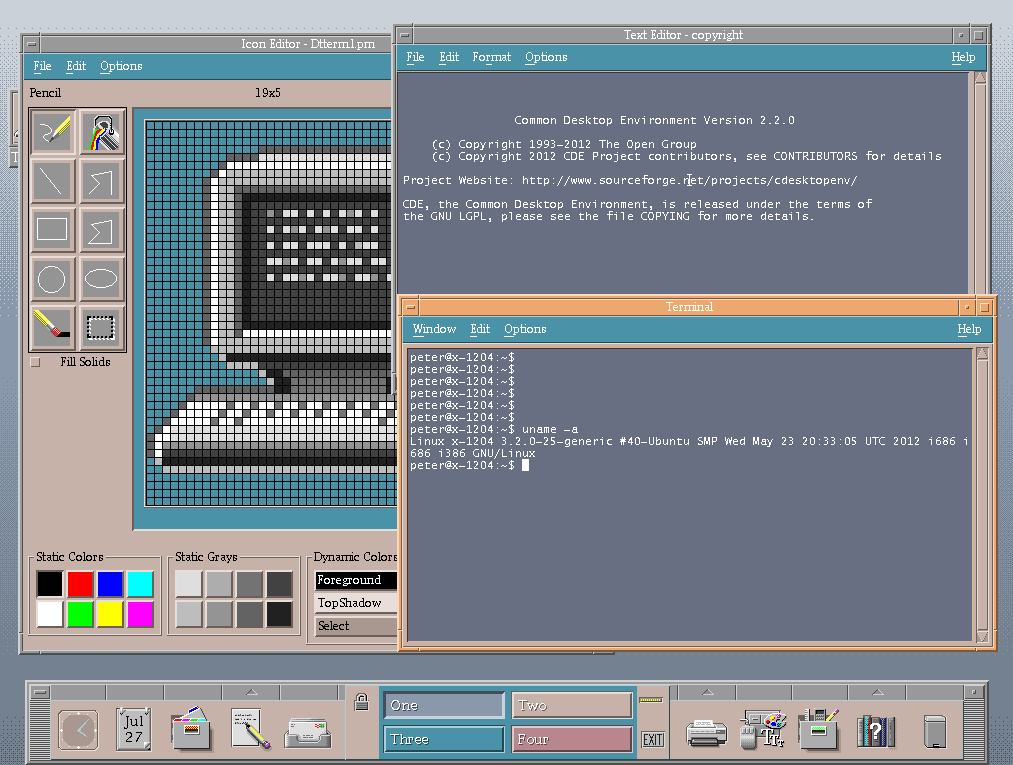
I’d just like to interject for a moment. What you’re referring to as Linux, is in fact, GNU/Linux, or as I’ve recently taken to calling it, GNU plus Linux. Linux is not an operating system unto itself, but rather another free component of a fully functioning GNU system made useful by the GNU corelibs, shell utilities and vital system components comprising a full OS as defined by POSIX. Many computer users run a modified version of the GNU system every day, without realizing it. Through a peculiar turn of events, the version of GNU which is widely used today is often called “Linux,” and many of its users are not aware that it is basically the GNU system, developed by the GNU Project. There really is a Linux, and these people are using it, but it is just a part of the system they use.
Linux is the kernel: the program in the system that allocates the machine’s resources to the other programs that you run. The kernel is an essential part of an operating system, but useless by itself; it can only function in the context of a complete operating system. Linux is normally used in combination with the GNU operating system: the whole system is basically GNU with Linux added, or GNU/Linux. All the so-called “Linux” distributions are really distributions of GNU/Linux.
Sorry, it had to be done. (But is actually misquoted)
Take that back, Frikandel-Fresser
| •`_´• |
It is Rechner (German for computer or calculator)
I use it as quick launcher:
meta +
T opens the terminalR opens the calculatorF opens browserJ opens my notes appEdit: bonus points if you can guess where R, F and J come from :D
I think on some distros you could also do shift + meta + left/right/up/down on multi-monitor setups to move the active window to another monitor
My wish is more basic

This is basically one of the core ideas of Ruby: that you can read it like a story. Once you are used to reading it as “do X unless Y”, you will miss it in other languages. Note that I wrote Y, not Y is true. Because often Y is a statement that has meaning in itself.
Example:
# imagine that given_name is some text from user input

# this is of course valid:
user.name = given_name if !user.is_locked

# but this reads more fluently:
user.name = given_name unless user.is_locked
Ruby also allows using ? as last character in method names, which is a convention for methods that return either true or false.
Same goes for ! (the bang operator), that is commonly used to tell developers that there exists a non-bang version of the same method as well. The bang method is often the more strict version (e.g. raises an error instead of returning nil; or having side effects compared to the non-bang version).
So the above example may be more commonly written like this:
user.name = given_name unless user.locked?
and the question mark makes you automatically adding is or has while reading: Set the user’s name to the given_name unless the user is locked
Of course this is all by convention and you may also do it different. But that’s how most Ruby code is written.
To stay consistent, lots of projects use RuboCop, which warns you on inconsistency based on your project’s settings.
Ruby has it as well:
a ||= b

# which means
a = a || b
# wich is the same as
a = b if !a
# which rubyists like to write as
a = b unless a
# or as ternary
a = a ? a : b
Everyone makes errors, but not everyone reflects and learns from them. I feel like that the Ubuntu team(?) did the right thing here.
Please mark this as NSFW ( not safe for Windows)
TL;DR do not use ==
Yes, clickbait. It is more like the opposite to me: Linus mitigates chaos before it ensues. Which is an absolute reasonable pro-gamer move in my eyes and speaks of good (time) management.



Hi, I have a possibly very dumb question. If a man is heterosexual and then transitions to female, does she become homosexual if she still preferring women?
I feel like the homo/hetero naming does not make sense at all. “I am attracted to female/male-looking people” etc. seems way more useful at that point?
(I am not a native English speaker. This question is genuine and should not come of as provoking or attacking. If this is the case, please let me know on how to rephrase it. Thx <3 )