That means fuel will continue to get more expensive as other markets switch to renewable energy sources. That in turn will reduce the number of ships which will make the fuel harder to find, which will reduce the number of products using that fuel, which will eventually result in total elimination of that market.
The big costs comes from building the infrastructure for fossil fuels. So as soon as demand falls, you have a huge part of the bill has been paid already. So you get low fossil fuel prices. You need to keep in mind that most large oil producers are state owned. Therefore those states will try to shut down other suppliers production.
You can see that already with sanctions against Russia and Iran to keep US oil producers going strong.
Its sort of happening hard like that but companies are resilient. According to the news, in the Philippines they are asking people to work from home and reduce energy use. It’s a beautiful country but you can see evidence of industry everywhere you go. Candy wrappers and bags on the street, etc etc. In most neighborhoods you see people sweeping like they do in Mexico. But roads, rivers are covered in trash unless they are part of the tourism industry. It much worse in India from what I can tell. So if that is being reduced, hopefully it will just stop happening.
I’ve been in Indonesia and it’s like that. Lots of rubbish everywhere. What is encouraging is that there appears to be a campaign to recycle and clean up. Some places are a fair bit cleaner now but you still see some flagrant rubbish tossers out and about.
markets don’t work that way. if you reduce demand (i.e. fewer people consume fossil fuels), and supply stays constant, that means that prices go down, which makes fossil fuels cheaper until people start using them again. eventually it balances out at an equilibrium state. supply and demand
Yes, thats assumed. However we are taking into account that machinery rusts away quickly. If you stop one refinery for example, that’s not a smooth change, its an abrupt step. If we stay steady below the usual high, then trying to come back will be expensive. For that reason we’ll see the price increase slowly…you need the fuel, so its a seller’s market, they need to get paid as if their load was double in case they need to double. At some point it might drop a bit until it becomes a luxury item.
Here’s an example where the price is going up became the supply keeps dropping and the demand keeps increasing regardless of the supply situation:
The same would happen to ice cars. People still want to use them if they have them, but the market keeps shrinking.


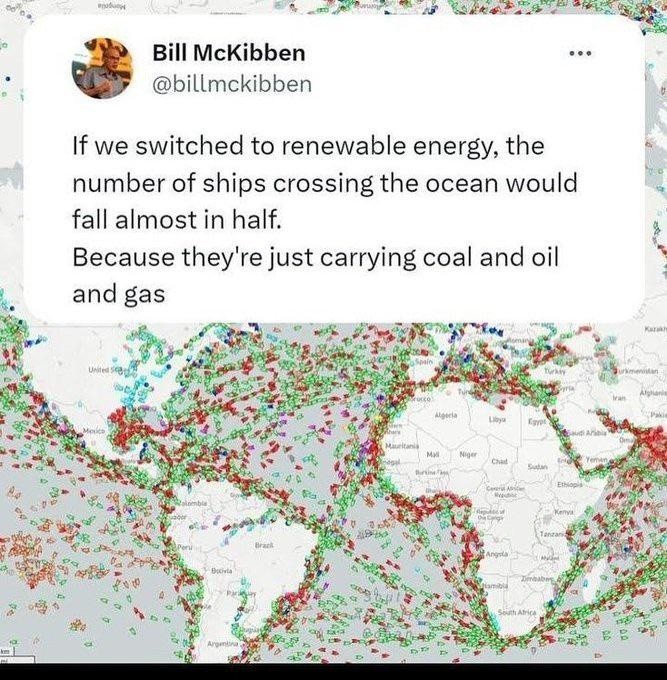
That means fuel will continue to get more expensive as other markets switch to renewable energy sources. That in turn will reduce the number of ships which will make the fuel harder to find, which will reduce the number of products using that fuel, which will eventually result in total elimination of that market.
Unless it’s officially propped up by governments at the behest of rich and powerful fossil fuel lobbies!
It’s inevitable that it will end some day, but not nearly as fast as it otherwise organically would.
The big costs comes from building the infrastructure for fossil fuels. So as soon as demand falls, you have a huge part of the bill has been paid already. So you get low fossil fuel prices. You need to keep in mind that most large oil producers are state owned. Therefore those states will try to shut down other suppliers production.
You can see that already with sanctions against Russia and Iran to keep US oil producers going strong.
That’s the dream.
Its sort of happening hard like that but companies are resilient. According to the news, in the Philippines they are asking people to work from home and reduce energy use. It’s a beautiful country but you can see evidence of industry everywhere you go. Candy wrappers and bags on the street, etc etc. In most neighborhoods you see people sweeping like they do in Mexico. But roads, rivers are covered in trash unless they are part of the tourism industry. It much worse in India from what I can tell. So if that is being reduced, hopefully it will just stop happening.
I’ve been in Indonesia and it’s like that. Lots of rubbish everywhere. What is encouraging is that there appears to be a campaign to recycle and clean up. Some places are a fair bit cleaner now but you still see some flagrant rubbish tossers out and about.
markets don’t work that way. if you reduce demand (i.e. fewer people consume fossil fuels), and supply stays constant, that means that prices go down, which makes fossil fuels cheaper until people start using them again. eventually it balances out at an equilibrium state. supply and demand
Yes, thats assumed. However we are taking into account that machinery rusts away quickly. If you stop one refinery for example, that’s not a smooth change, its an abrupt step. If we stay steady below the usual high, then trying to come back will be expensive. For that reason we’ll see the price increase slowly…you need the fuel, so its a seller’s market, they need to get paid as if their load was double in case they need to double. At some point it might drop a bit until it becomes a luxury item.
Here’s an example where the price is going up became the supply keeps dropping and the demand keeps increasing regardless of the supply situation:
The same would happen to ice cars. People still want to use them if they have them, but the market keeps shrinking.