I think in the purest sense, just having some form of common currency would be considered “order” - unless you’re suggesting that only pure barter is necessary for a functional society - but then even that requires some broad agreement on weights & measures in order to function (e.g. how long is a board-foot? how much flour is 1 kilogram?). Collectively the market must agree on some standards in order to function.
Also, unregulated markets always end in monopolies, with or without a capitalist economy. Sooner or later someone will try to establish themselves as the sole supplier of some good or service. Only active oversight and regulatory enforcement can prevent it.
But agreement without hierarchical imposition is self ordering. Common currency and measurement standards can and do arise without the imposition of state fiat.
The great advantage of markets, as observed by Adam Smith, is that they’re self-ordering. No grand plan has to be drawn up by any central authority, not even an advisory one, for even very complex and completely disconnected supply chains to be coordinated between firms with great geographic distance and numerous degrees of separation between them.
Common currency and measurement standards can and do arise without the imposition of state fiat.
This was not the argument. You are moving the goalpost. The argument was:
the fundamental functioning of people does not require ordering to be viable.
Self-ordering is still ordering. Whether a government is involved in enforcing it or not is irrelevant, there will be enforcement of agreements even if the only ones conducting the enforcement are the concerned parties. That is order.
No grand plan has to be drawn up by any central authority
Sure, they don’t have to be planned and regulated in advance, but eventually common agreements will produce a regulating group with enforcement authority because organizing in this way is more efficient for the market overall.
That group doesn’t have to be a government per se, but it will have regulatory authority.
This was not the argument. You are moving the goalpost. The argument was:
the fundamental functioning of people does not require ordering to be viable.
Self-ordering is still ordering.
That’s a misunderstanding of what I said, though I’ll gladly concede to poor wording on my part. Ordering in the sense that it is imposed by someone else; self ordering is thus innately opposed to ordering in the sense I was using it in the original claim; though, again, I concede to poor wording. “does not require ordering” was meant in the definition 2 sense, not definition 1, which I thought was implied by the imperative infinitive.
Self-ordering is still ordering. Whether a government is involved in enforcing it or not is irrelevant, there will be enforcement of agreements even if the only ones conducting the enforcement are the concerned parties. That is order.
Sure.
Sure, they don’t have to be planned and regulated in advance, but eventually common agreements will produce a regulating group with enforcement authority because organizing in this way is more efficient for the market overall.
This is a point of legitimate disagreement - while it is more efficient (and desirable), I agree, it is not inevitable.
In any case, your argument is in agreement with the core point - that people do not NEED ordering (definition 2) from an authority to organize their own affairs.
Yes, I always form my socioeconomic conclusions based on television sitcoms, they’re the best source of opinions.
Sarcasm aside, the idea presented here doesn’t work for any more complex form of cooperative labor (e.g. public water systems, telecommunications infrastructure, hospital services, large research projects, bridge construction, etc). Someone has to perform administrative duties to organize the work being done and ensure that the needed materials and experienced personnel show up at the right places at the right times.
Like, try telling the head surgeon of an OR that the staff can be left to figure things out for themselves, and all the operations will get done correctly as scheduled without killing any patients. They’d laugh you out of the building. The surgery schedule would be chaos by the end of a single shift.
Organisation doesn’t mean orders from above or coercion. People are perfectly capable of organising themselves without a master. Many cooperatives use a commissioner to organise the division of labour, but they’re crucially not a boss. Every one of their decisions can be challenged and overruled. Unlike a boss.
The great thing about this system of non-coercion is you don’t need to participate. You can continue taking orders from someone you deem superior to yourself and we can self organise, and we can leave each other alone. No need to antagonise, because you can live your life and we can live ours.


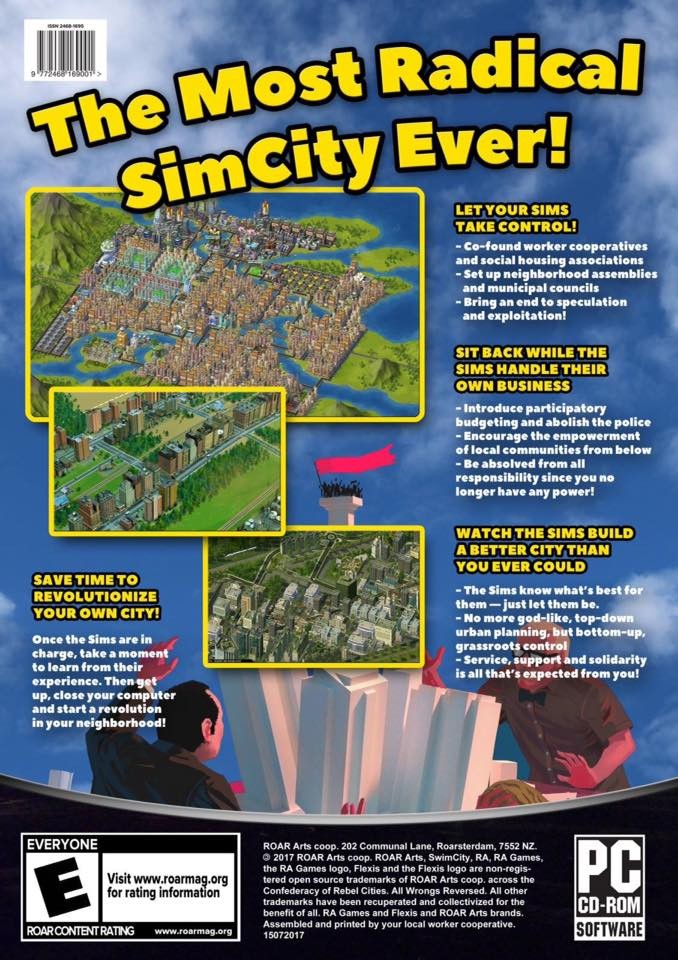
[citation needed]
… the functioning of markets comes to mind.
Hmm, are markets self-ordering?
I think in the purest sense, just having some form of common currency would be considered “order” - unless you’re suggesting that only pure barter is necessary for a functional society - but then even that requires some broad agreement on weights & measures in order to function (e.g. how long is a board-foot? how much flour is 1 kilogram?). Collectively the market must agree on some standards in order to function.
Also, unregulated markets always end in monopolies, with or without a capitalist economy. Sooner or later someone will try to establish themselves as the sole supplier of some good or service. Only active oversight and regulatory enforcement can prevent it.
But agreement without hierarchical imposition is self ordering. Common currency and measurement standards can and do arise without the imposition of state fiat.
The great advantage of markets, as observed by Adam Smith, is that they’re self-ordering. No grand plan has to be drawn up by any central authority, not even an advisory one, for even very complex and completely disconnected supply chains to be coordinated between firms with great geographic distance and numerous degrees of separation between them.
This was not the argument. You are moving the goalpost. The argument was:
Self-ordering is still ordering. Whether a government is involved in enforcing it or not is irrelevant, there will be enforcement of agreements even if the only ones conducting the enforcement are the concerned parties. That is order.
Sure, they don’t have to be planned and regulated in advance, but eventually common agreements will produce a regulating group with enforcement authority because organizing in this way is more efficient for the market overall.
That group doesn’t have to be a government per se, but it will have regulatory authority.
That’s a misunderstanding of what I said, though I’ll gladly concede to poor wording on my part. Ordering in the sense that it is imposed by someone else; self ordering is thus innately opposed to ordering in the sense I was using it in the original claim; though, again, I concede to poor wording. “does not require ordering” was meant in the definition 2 sense, not definition 1, which I thought was implied by the imperative infinitive.
Sure.
This is a point of legitimate disagreement - while it is more efficient (and desirable), I agree, it is not inevitable.
In any case, your argument is in agreement with the core point - that people do not NEED ordering (definition 2) from an authority to organize their own affairs.
I present this highly acclaimed and often cited documentary as evidence. (skip to 17:23 if the time jump doesn’t work)
Yes, I always form my socioeconomic conclusions based on television sitcoms, they’re the best source of opinions.
Sarcasm aside, the idea presented here doesn’t work for any more complex form of cooperative labor (e.g. public water systems, telecommunications infrastructure, hospital services, large research projects, bridge construction, etc). Someone has to perform administrative duties to organize the work being done and ensure that the needed materials and experienced personnel show up at the right places at the right times.
Like, try telling the head surgeon of an OR that the staff can be left to figure things out for themselves, and all the operations will get done correctly as scheduled without killing any patients. They’d laugh you out of the building. The surgery schedule would be chaos by the end of a single shift.
Yes, I always form my socioeconomic conclusions in the comments sections of meme communities, they’re the best place for debate.
Sarcasm aside, you have strong opinions for someone who doesn’t know what they’re talking about.
Organisation doesn’t mean orders from above or coercion. People are perfectly capable of organising themselves without a master. Many cooperatives use a commissioner to organise the division of labour, but they’re crucially not a boss. Every one of their decisions can be challenged and overruled. Unlike a boss.
The great thing about this system of non-coercion is you don’t need to participate. You can continue taking orders from someone you deem superior to yourself and we can self organise, and we can leave each other alone. No need to antagonise, because you can live your life and we can live ours.