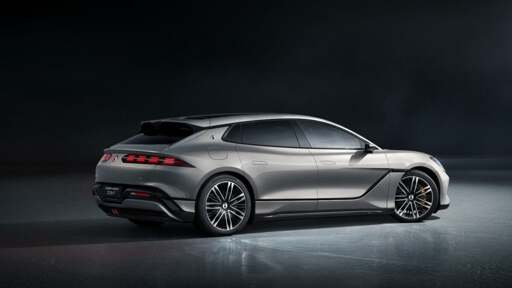
The new Blade Battery 2.0 Flash Charging system can recharge EV batteries from 10% to 70% in five minutes.
Wait…
It’s only for 10-70%?
I thought the standard was to 80%.
Maybe there is no standard…
My car is a 2 min battery that can charge from 20-35% in 2 min.Any charging can be 5 minute charging if you unplug it soon enough.
Meanwhile, a near full recharge, from 10% to 97%, takes about nine minutes.
It’s pretty impressive.
In fairness, when I was cross shopping a few years ago ranges were all over the place. 10-70, 20-70, 20-80, 10-90. I do think 10-80 is emerging as a more universal standard but it’s certainly not ubiquitous yet
I’d rather see a full curve on a chart from 0-100, preferably with multiple curves for outdoor temp variance. -20, -10, 0 10, 20, 30. I don’t want cherry picked data. Give me the full picture, in one picture.
That would be a useful thing to appear in the pamphlet or whatever, but I do still think there’s some value in saying “expected value of 5 minutes” somewhere prominent.
Because the whole point of quick charging is that (most of the time) you aren’t charging to 100% when you’re also in a time crunch. You’re either slowly charging to 100, or you’re quickly charging until you reach the limit of quick charging, and then driving to the next quick charger.
So what matters in practice is “how long until quick charge stops” and “how much range does that charge get me”
I wonder if there’s hysteresis where the slope of the curve depends on the prior charge history.
Like, if you charge from 1% to 100%, does the 20-80% part of the curve look different than if you discharged down to just 20 and started charging to 80 from there?
Universal standard should be 0-100 tbh, yes it’s not representative of the majority of real world use cases, but it’s the least arbitrary measurement and doesn’t hide anything while also giving people an upper bound of charge time in a worst case scenario.
All other measurements exist to generate hype
That would be rather dumb and useless for real world use. Battery charging curves taper off aggressively when you approach 100%.
My Ioniq 5 can do 10-80% in 18-20 minutes. But the remaining 80-100% can easily take 45 more minutes… So I can get way further, in a shorter amount of time by charging to 80%, driving until at 10% and then charging to 80% again.
On top of that… For NMC batteries, the charging from 80-100% is where you put a lot of wear on your battery. So if you are at all interested in battery longevity you should avoid charging above 80% as much as possible.
Here’s some data about the charging curve and amounts of time it takes to charge in different intervals on the Ioniq 5: https://evkx.net/models/hyundai/ioniq_5/ioniq_5_long_range_awd/chargingcurve/
I think they’re saying the measurement should be for a full charge to give you worst case scenario, which I wouldn’t be opposed to but would still want to know the 80% rate for the reasons you mentioned
Sure, if all manufacterers included both, that would be nice. But removing the 10-80 to replace it with a 0-100 would be useless.
The issue is that the charge behaviour of 10-80, 20-70, etc. is specific to lithium Ion batteries. Other chemistries have different properties, different charge curves. The only universally applicable standard that isn’t cherry picked to look specifically good, is 0-100. Sure it won’t help real world expectations, or help fuel brained people understand how long they’d really spend at a charger. For that you need to know more specifcs about your car. But it’s an important benchmark to compair different models and tech. And should be required on the window sticker and ads. Requiring 0-100 times won’t preclude other cherry picked numbers from being shown also. Requiring one will be enough to ensure both are shown.
What about 0-100 and optimal time to charge x miles
“That would be rather dumb and useless for real world use. Battery charging curves taper off aggressively when you approach 100%.”
I literally acknowledge this in the comment you are replying to. But the overall charge time still gives you a pretty decent idea of how 10-90 will stack up since a vehicle that charges 0-100 faster will also charge 10-90 faster as well.
The point is that 0-100 locks in a set standard that is’t arbitrary and easy to change to make things look better than they are, not that it’s the best example of real world use. It gives less knowledgeable customers a consistent point of comparison across vehicles and brands.
Too bad BYD is in the business of
childforced labor in its manufacturing plants.That sounds terrible. Where can I read a report on this?
Not about child labor but here is a report on some sus stuff:
Thank you! I corrected my first comment! That was irresponsible of me, I misremembered.
My quick search turned up reports of forced labour, but not child labour in particular.
Shit, thanks for the correction! I have a fever so I probably misremembered. I’ll correct my first comment.
as an EV owner, zero care.
This seems to be a convern for non EV owber. I have a 3kW charher at home, and sooar panels, plug in, its full the next day, rinse and repeat
The bigger issie is the ability to charge at home, higher density living and no at home charging would be horrible but then when I lived in the inner city I didn’t need a car at all, so thats the best part.
Anyone who can charge at home is crazy not to move to an EV when they can.
5 min charging, but 15 min to park the car, plug the car, find that you need to download an app, scan the qr code, download the app, create an account, verify your email, verify your phone number, no I don’t want a subscription, no don’t send me customized emails from your partners, enter the 10 number of your credit card, verify the paiement on the bank app, click on “start the charge”, it failed because the car was already plugged, unplug the car, redo steps 4-12, start the charge, plug the car and it’s finally started charging.
This is my biggest issue with EV charger, having to jump through all that to charge the car just because they want to have their app on my phone.
With today’s technology, we could just arrive at the station, plug the car and that’s it.
The station can recognize the car, could get the paiement data from a shared database between chargers and start charging both my car and my credit card automatically.
I drive hok, plug in, charge off my solar, this is 80% of the time, 15% is charging overnight on a low tariff and 5% of the time i need a public charger. Doing that only when I have a long drive into a near by big city for chores.
I do my chores, plug in, use an RFID card and swipe, then go over the road and do my groceries, come back and then I drive home
Ford: don’t make us compete. Our products are not competitive.